A preview with a clear boundary
Automechanika Frankfurt 2026 runs from 8 to 12 September 2026. This page examines the technology conversation around vehicle interiors and aftermarket personalisation. The official Messe Frankfurt exhibitor directory was checked for CockpitDekor, Cockpit Dekor, Autodekor and Auto Dekor; no verified individual listing was found in the available public result at publication time.
From trim to platform technology
The aftermarket is moving from generic accessories toward parts that respect the platform: dashboard version, controls, apertures, steering side and intended use. For a van, workshop vehicle or specialist fleet, the visual result matters, but so do repeatability, traceability and the ability to produce a small approved series.
A practical technology matrix
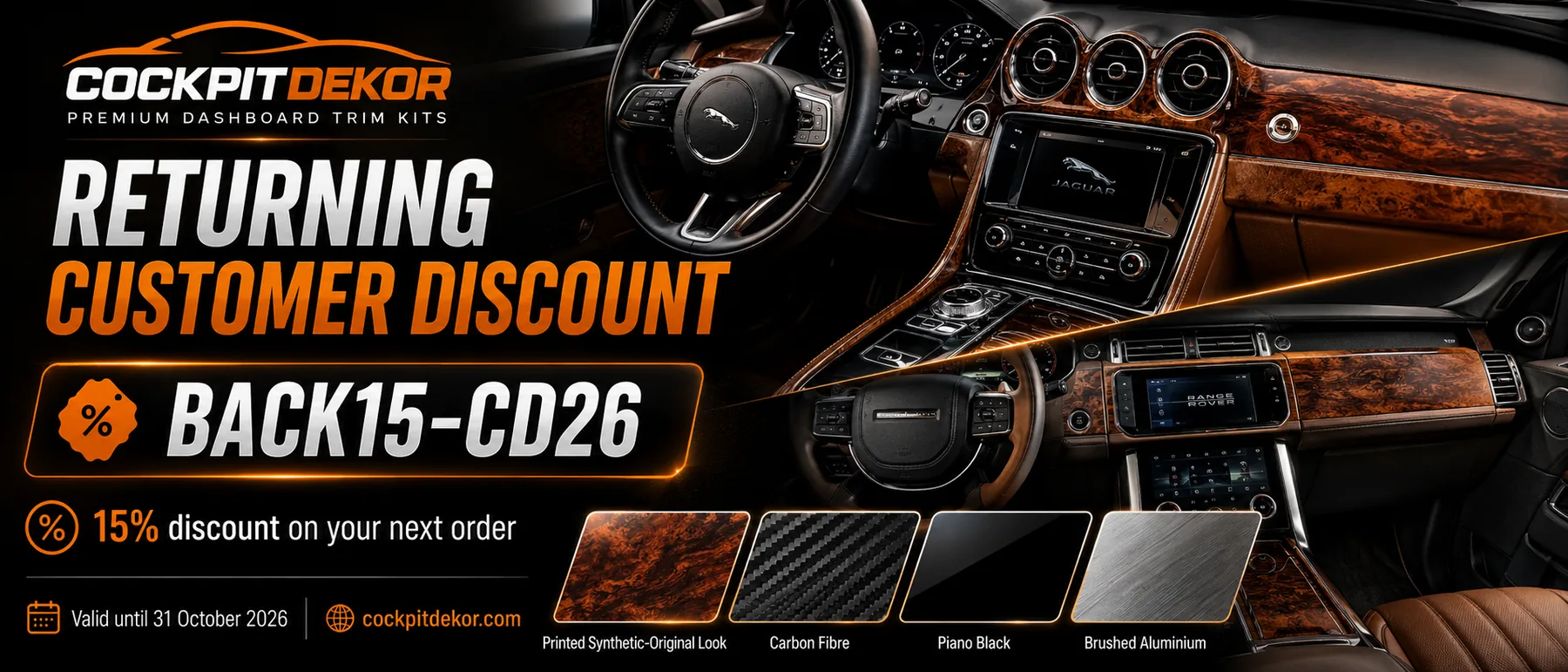
UV printing supports controlled graphics and surface effects. Precision cutting supports repeatable outlines and clean apertures. CNC or plotter workflows can reproduce approved templates. PU doming and 3D badges add tactile depth. Carbon, brushed aluminium, wood and piano-black directions create distinct visual languages. These are process categories, not claims about a particular machine brand or specification.
Vehicle sectors
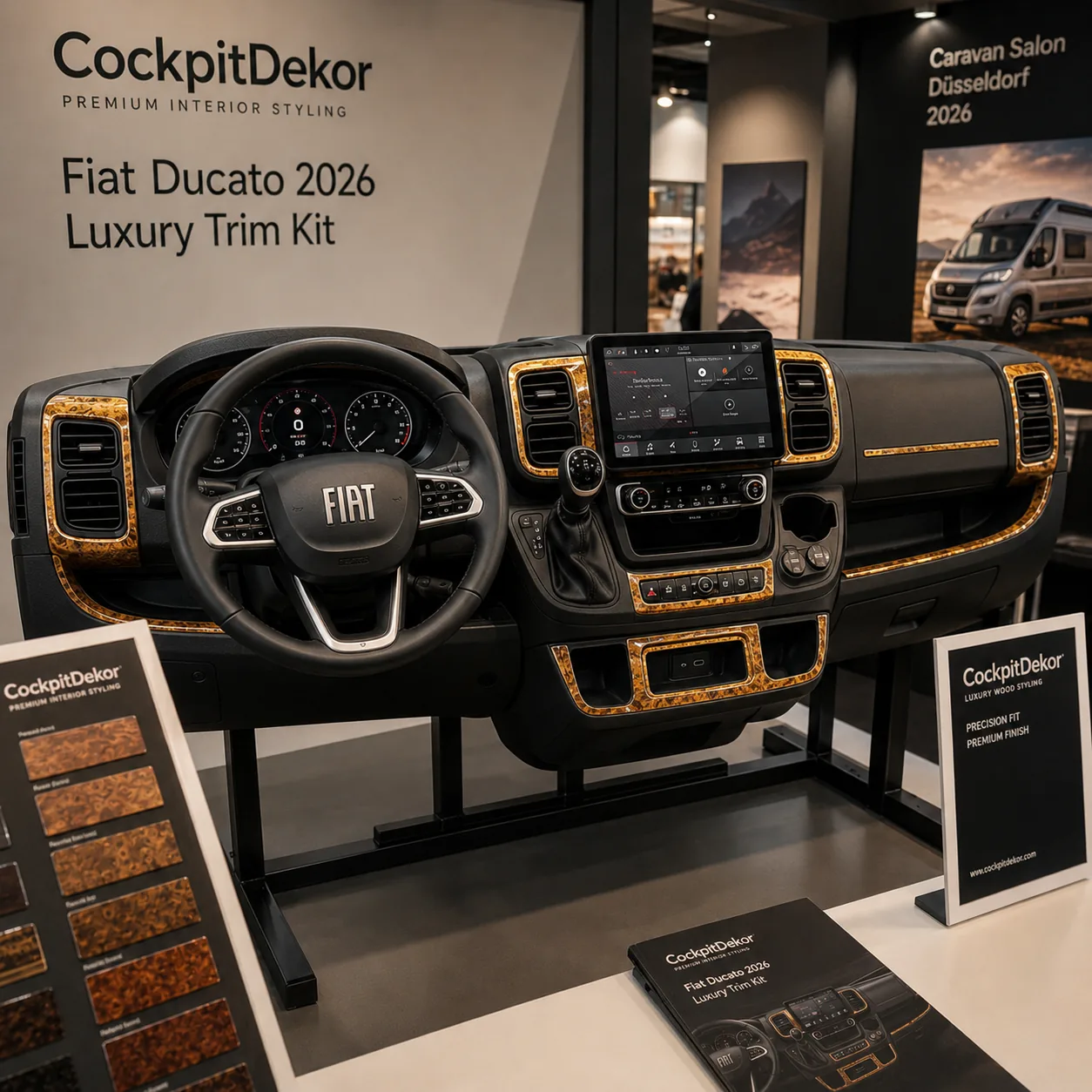
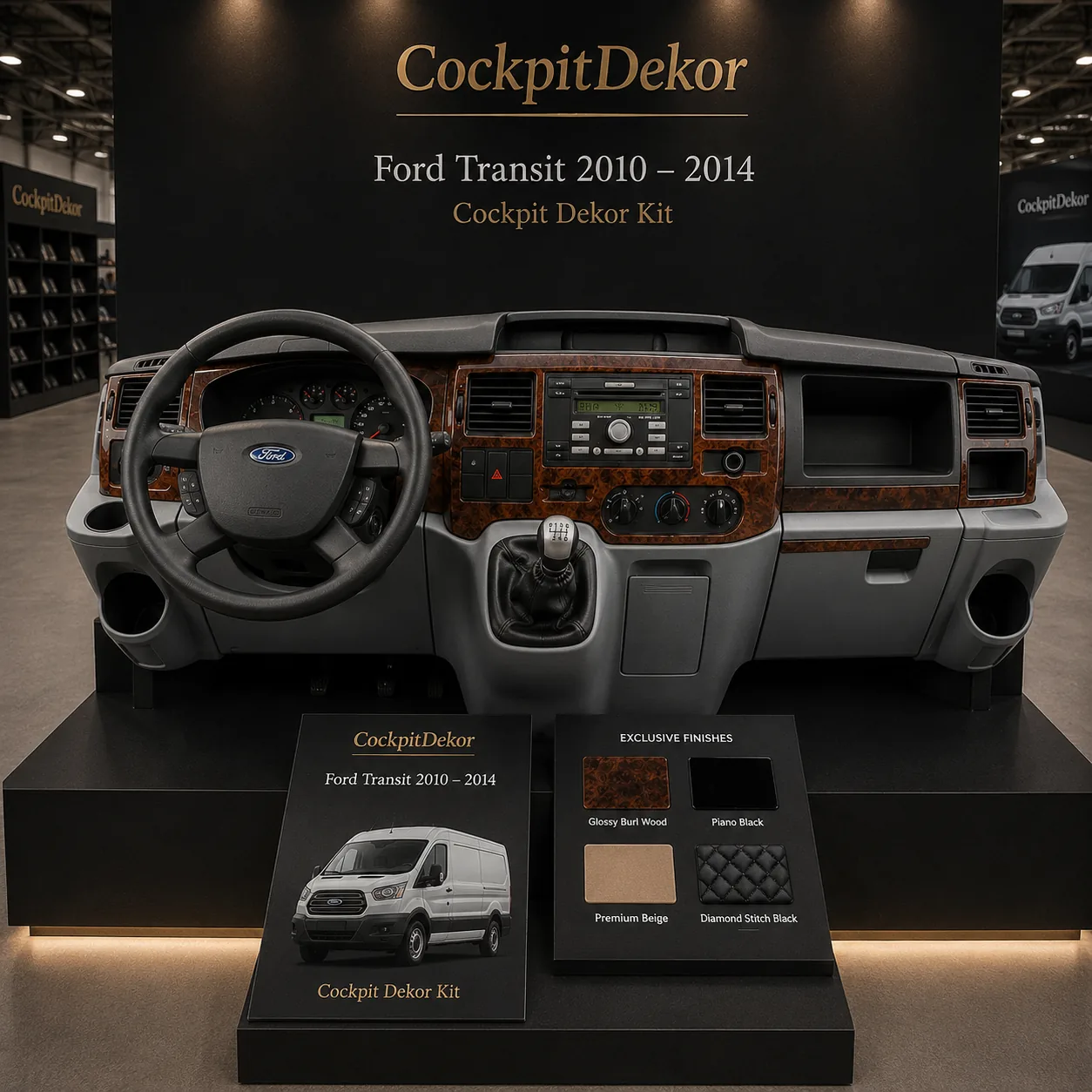
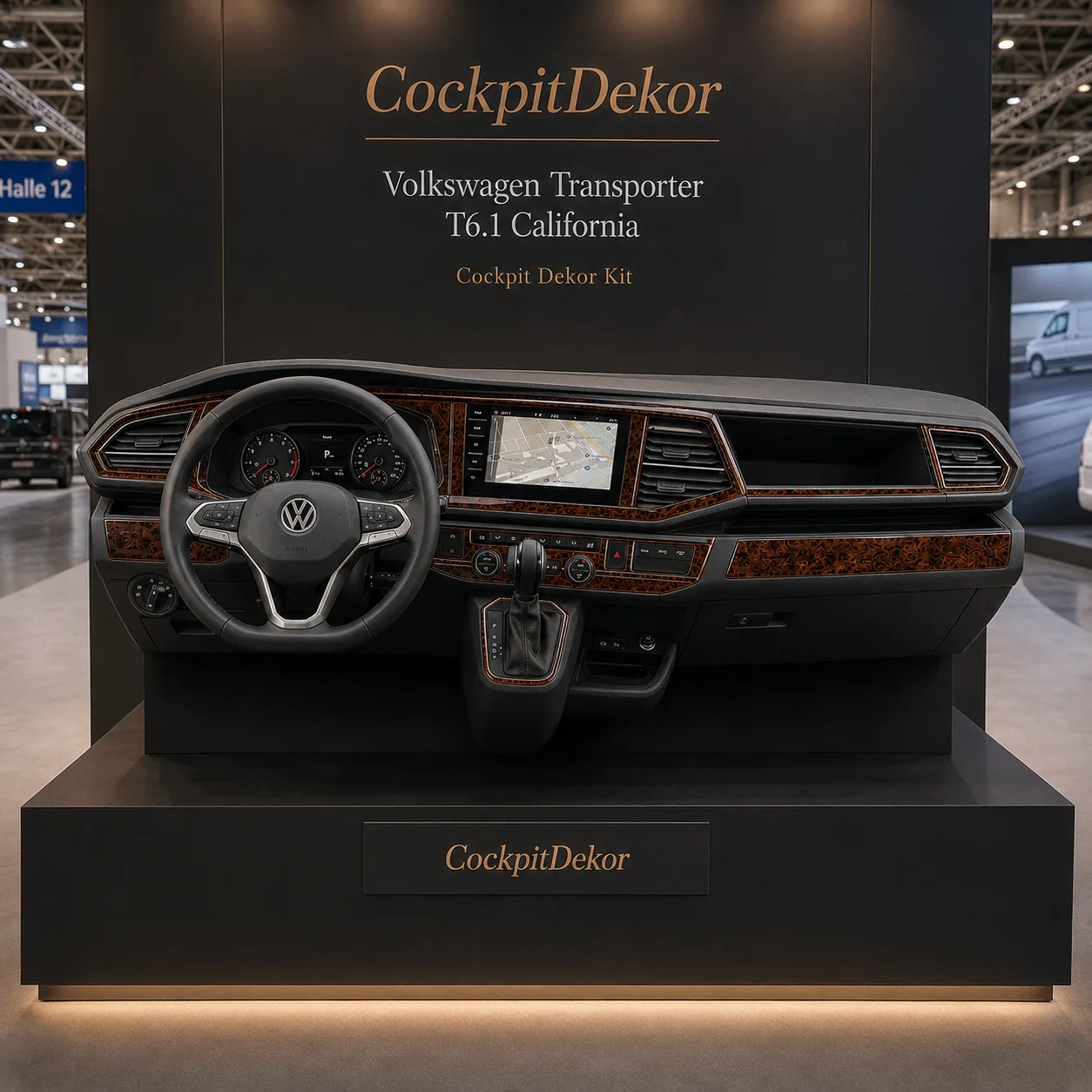
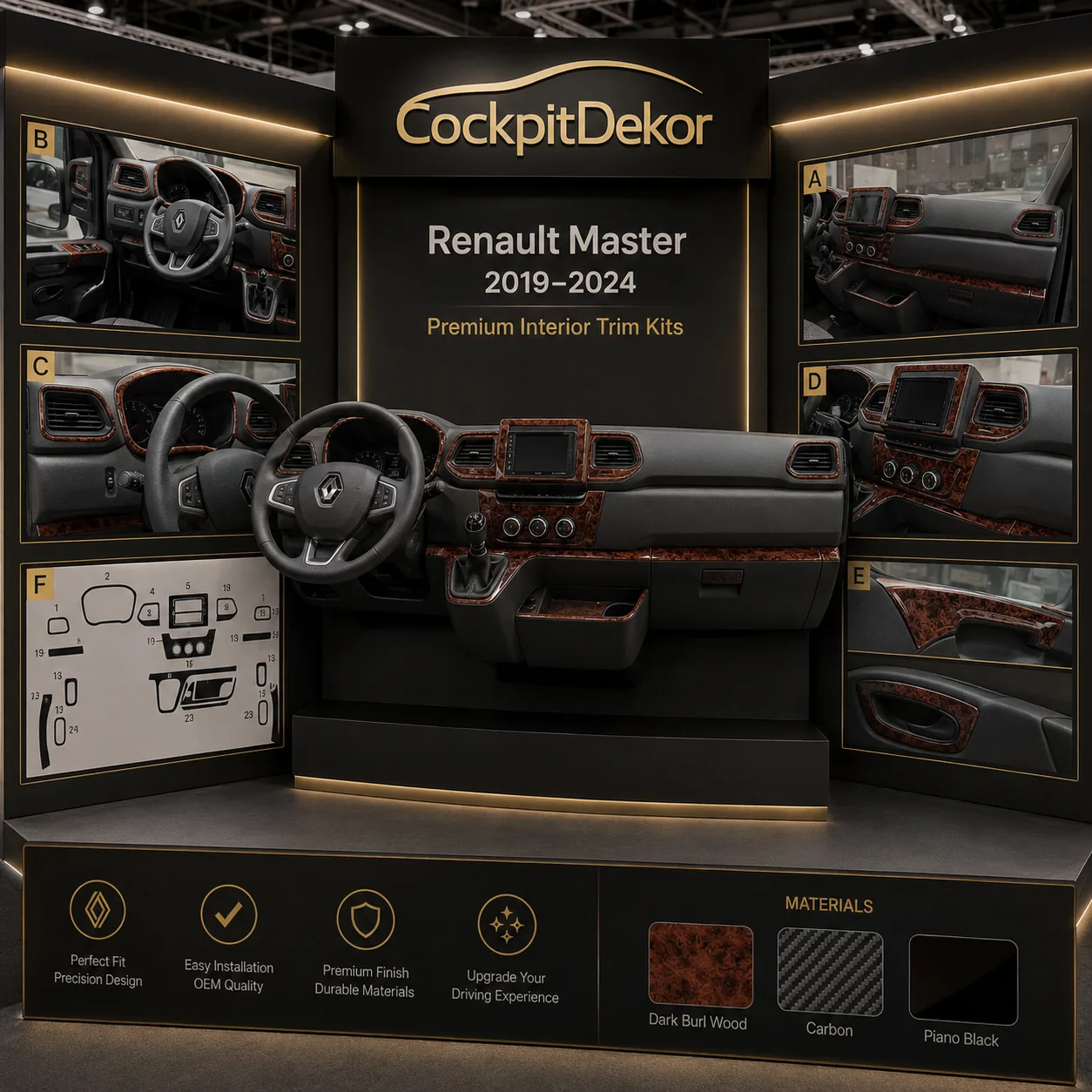
The same discipline applies across campervans, light commercial vehicles, passenger cars, trucks and buses: identify the exact platform, confirm the visible surface, choose the finish, document the reference and keep the installation guidance clear. Fiat Ducato, Peugeot Boxer, Ford Transit, Renault Master, VW Transporter, Sprinter, Crafter and Iveco Daily are examples of research families, not a universal compatibility promise.
Workshop and dealer value
A dealer or converter needs a clear handover: vehicle identity, generation, dashboard/equipment notes, approved images and a reference number. That turns a decorative request into a manageable product-development brief and makes customer feedback more useful.
Automechanika preview status
The project is deliberately framed as an Automotive Interior Technology Preview. If the official Messe Frankfurt directory later confirms a CockpitDekor entry, the page can be updated with verified details. Until then, there is no stand CTA, no attendance claim and no invented hall number.
What should be developed next?
The strongest next step is a shared evidence format for low-volume interior projects: photograph the original surface, record platform and equipment, select from approved material swatches, test the fit, and report the result. That approach is useful to workshops and owners even when the visual finish is highly individual.
Why evidence beats a broad product promise
Aftermarket buyers compare more than a finish name. They need to know whether the piece follows the original edge, whether the control remains accessible, and whether a replacement radio or HVAC panel changes the reference. A public evidence page can show the source image, the intended application, the limitations and the date of review. This is especially valuable when a vehicle has been converted, repaired or updated after it left the factory.
Small-batch personalisation as a business case
Low-volume production is not simply a smaller version of mass production. It requires a clear approval loop, sensible file naming, repeatable inspection and a way to record customer-specific decisions. For workshops, that can support a few high-value interior projects without pretending that every custom variation is a catalogue product. For dealers, it can create a transparent conversation about lead time, finish choice and fitment confirmation.
Human factors in cockpit design
The cockpit is a high-attention environment. Glare, reflections, tactile edges and visual contrast matter because the driver must still read instruments and use controls in changing light. Decorative work should remain subordinate to the vehicle’s controls and safety markings. Editorial review therefore looks at restraint as well as spectacle: a successful surface feels integrated once the novelty has passed.
A research agenda for Frankfurt
The useful question for an aftermarket technology event is how design information travels from an original vehicle to a repeatable part. That means comparing scanning or photography, template control, surface preparation, digital decoration, tactile layers, quality checks and installation feedback. Automechanika is a suitable context for that discussion even when an individual brand’s exhibitor status remains unconfirmed.
Specification as editorial evidence
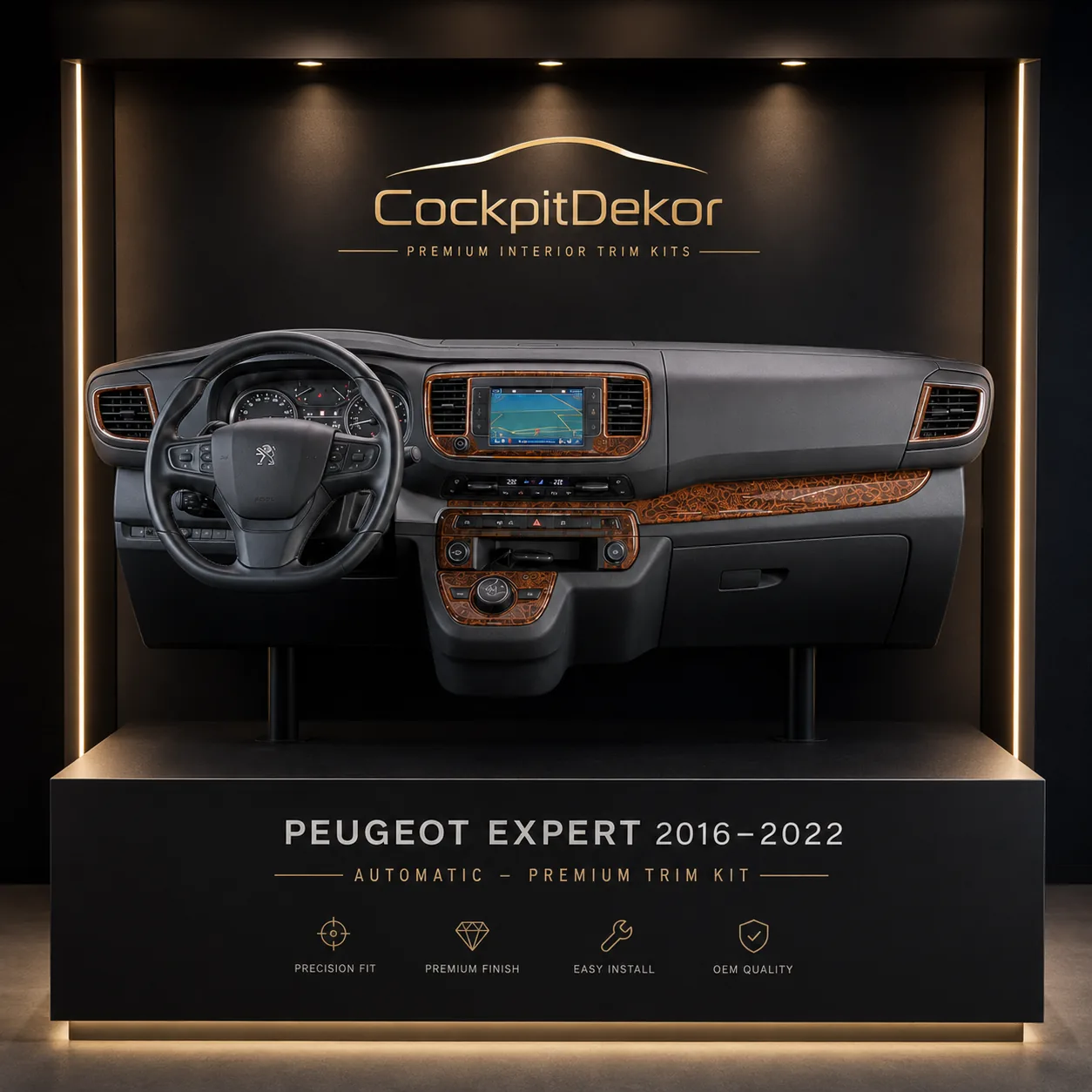
A useful interior feature should make its assumptions visible. The source vehicle can be identified by model family and generation, while the dashboard photograph records the actual control layout. The finish can be named without suggesting that colour alone proves compatibility. Captions can distinguish supplied product imagery, workshop photography and concept visuals. This discipline helps a professional reader understand what is known, what is inferred and what still needs confirmation.
Durability, care and everyday use
A surface seen in a show setting is not the same as a surface used through winter, summer glare, dust and repeated cleaning. A responsible preview asks how the finish fits the owner’s routine, how reflections interact with the windscreen and how the material language works beside existing switchgear. Care instructions and installation limitations should stay close to the product reference, so the visual promise remains connected to real ownership.
A European aftermarket perspective
The European van market is diverse in age, body style and conversion history. A workshop may see a recent Ducato, an older Transit and a T6.1 in the same week. A shared reference system helps teams speak consistently, prevents cross-generation recommendations and gives product development a clean list of the next high-value platforms to document.
Editorial discipline is a product advantage
A specialist page earns trust when it shows the decision path: the original reference, the selected finish, the known limitations and the point at which a customer should request confirmation. That is also good product development practice. It reduces avoidable returns, gives workshops a common language and leaves room for genuinely custom projects without confusing them with verified catalogue applications. Readers can then compare a real reference, a concept, and a future development idea without treating them as the same kind of evidence. That transparency is useful for buyers, installers, editors and future engineering partners across Europe.